
WASPS & HORNETS

Wasps are an important part of the biodiversity of an area. They can be beneficial as they feed on other pest insects as well as being a food source themselves to predators. Wasps also play a small part in the polination of plants/flowers which they do unintentionally whilst foraging for prey insects. If left alone wasps dont pose much of a threat, however they can become a nuisance when a wasp nest is in close proximity to a property. They pose a risk to health and safety due to their ability to sting, if anyone gets stung it can be a painful experience and can also be a more serious risk if anyone allergic is present. Wasps in a kitchen environment can pose a food contamination risk and be a nuisance to customers which can have a negative impact on a business. Wasp nest treatment involves the use of an insecticidal powder that is applied to the wasp nest with use of specialised equipment. Often wasp nests are contained within cavities and are not accessible, therefore the treatment is often applied via external access points. In cases where the wasp nest is visable insecticidal sprays can be applied directly to the nest and the nest can then be removed. Control methods for nuisance wasps outside in areas such as beer gardens or bin areas include wasp traps such as wasp banes or wasp pots.
BED BUGS
.png)
Bed bugs are a common pest and are small parasitic insects that feeds on the blood of humans and animals. Bed bugs usually feed during the night so often go undetected, however their bites become itchy and can cause skin irritation, disrupt sleep and this can lead to stress and anxiety for anyone who is affected. Bed bugs can be hard to find due to their ability to get into tiny cracks and crevices and treatment can be difficult as they can be resistance to some insecticides. Bed bug infestations can have a negative impact on businesses such as hotels and can be costly if infestations get out of hand as infested items might need replacing. Bed bug treatment involves the use of targeted residual insecticidal sprays which are applied to affected areas. In some cases where insecticidal spray treatments are not effective, a heat treatment may be required. If you suspect you might have bed bugs do not start moving furniture around as this is likely to spread bed bugs further around your property. Leave all furniture in place and contact a professional pest controller for advice as DIY bed bug treatments are usually ineffective.
FLEAS
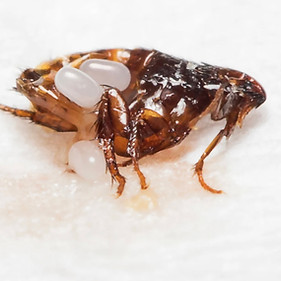
Fleas are a small, wingless parasitic insect that feed on the blood of warm-blooded animals most commonly cats and dogs, but can be also be found on other hosts such as birds and other mammals. Fleas can and do bite humans which can result in itchy bites and skin irritation. As well as living directly on animal hosts fleas can also be found in carpets, bedding and other soft furnishings and in cracks and crevices where the larvae feed on organic debris. Fleas cause discomfort to pets and to humans who are bitten and if left untreated infestations can soon get out of hand. Flea treatments involve the use of targeted residual insecticidal sprays which are applied to affected areas. In cases with large infestations in may be also be necessary to fumigate or fog the property to eliminate any live fleas. In cases where it is suspected that pets are the source of the flea infestation it would be recommended that pet owners also treat their pets with an appropriate flea treatment such as a spot on applied to the skin of the pet.
COCKROACHES

The most common species of cockroaches which are often found in UK homes and businesses are German and Oriental cockroaches. They often arrive via imports and thrive in warm, moist environments such as kitchens, basements and drains. They can spread diseases such as salmonella and pose a risk to health and safety due to surface and food contamination. If left untreated cockroach infestations can soon get out of hand due to their ability to get everywhere! Live cockroaches are unsightly and sightings can have a negative impact on businesses. In some circumstances cockroach infestations can lead to food establishments being shut down if the infestation is not controlled. Cockroach treatment involves the use of targeted residual insecticidal sprays along with insecticidal gels which are applied to the affected areas. As well as this cockroach traps are also utilised as a method of control and as a monitor after treatments have been carried out.
CARPET MOTH

Carpet moth/Clothes moth (common and case-bearing) can become a pest in any environment where there is carpet or clothing containing natural fibres. The larvae of the moth feeds on any material containing natural fibres and can cause visable damage such as holes in clothing or bare patches on carpet. Adult moth flying around a property can be a nuisance and have a negative impact on businesses. Carpet and clothes moth treatments involves the use of targeted residual insecticidal sprays which are applied to affected areas. Pheromone moth traps can also be utilised both as a control method and as a monitor.
WAREHOUSE MOTH

Warehouse moth (indian meal moth). The warehouse moth or indian meal moth is a common pest and can infest dry stored products such as grains, cereals, nuts etc. The moth larvae can bore holes in packaging and damage and contaminate dry food products. The moths leave a silken webbing in products which is noticeable and is often the key sign of an infestation (as well as crawling larvae and the adult moth themselves). If left untreated the moths can cause damage to product whilst also being a product contamination issue. Treatment involves location and removal of infested products, targeted residual insecticidal sprays and depending on the situation fumigation of the area may be required. Pheromone moth traps can be utilised as a control method and as a monitor.
CARPET BEETLES

Carpet beetle larvae (also known as wooly bears) damage wool and other natural fibres within carpets and other materials which can lead to patchy and threadbare carpet. If left untreated carpet can become damaged and may need replacing which can be costly. As well as this, the beetle larvae (wooly bears) can cause skin irritation in humans if they come into contact with people. Treatment involves the use of targeted residual insecticidal spray treatments of the affected areas. Carpet beetles can also found in loft spaces where materials containing natural fibres such as old insulation, stored woollen items and old birds nests are present for the larvae to feed on. If it is suspected that this is the case, the source of the infestation would need locating and removing and it may be necessary to fumigate the loft space.
LARDER BEETLES
.jpeg)
Larder beetles are scavengers usually attracted to animal based food scraps, pet food and sometimes animal carcasses. They are commonly found in kitchens and pantries. Treatment involves finding and removing the source of the infestation such as pet food, animal carcasses or even bird nests. A deep clean of the affected are would then be carried out especially in cracks and crevices to remove any eggs, larvae, adult beetles and debris. In cases where cleaning and removal of the source alone do not resolve the issue, a targeted residual insecticidal spray treatment would be carried out to cracks and crevices in the affected area. If a safe non-toxic approach is required, food grade diatomaceous earth can also be applied to cracks and crevices in the affected area. Insect traps can be utilised as a control method and as a monitor to catch adult beetles especially in areas near light or around windows.
BISCUIT BEETLES

Biscuit beetle are small reddish-brown beetles which can infest dry stored product such as cereals, biscuits and spices. infestations can get out of hand if not controlled and this can lead to food product contamination and damage to food products. Treatment involves locating the source of the infestation and removing and discarding infested products. A thorough clean would then need to be carried out in the area where the product is stored. Targeted residual Insecticidal spray treatments can be carried out to cracks and crevices or if a non-toxic method of control is required, diatomaceous earth could also be applied into cracks and crevices. Insect traps can be used as a control method and as a monitor in areas where biscuit beetle activity would be likely. Keeping product stored within sealed air tight containers will help to prevent issues with biscuit beetle.
GRAIN WEEVIL

Grain weevils are a common pest in grain stores and can infest anywhere where cereals or grain is stored. They can cause significant damage to grain based products and in extreme circumstances even reduce harvested crop yields. The larvae of the grain weevil eat the inside of grain kernels causing damage to the product. Treatment involves locating the source of the infestation and discarding infested products and then carrying out a thorough clean of the area where the product is stored. Targeted residual Insecticidal spray treatment can be carried out to cracks and crevices, or food grade diatomaceous earth can be applied to cracks and crevices as a non-toxic control method. In areas where the infestation is spread out over a large area such as a grain store, a fumigation treatment would be required. Storing product in sealed air tight containers will help to prevent issues with grain weevil.
FLOUR BEETLE

Flour beetles (Confused flour beetle and Rust Red flour beetle) are a common pest infesting dry stored goods such as flour, cereals, grains and nuts. They pose a contamination risk to dry stored goods and they can release a chemical which causes a bad smell and taste in the products they infest. Treatment involves locating the source of the infestation and discarding infested products and then carrying out a thorough clean of the area where product is stored such as shelving units etc. Targeted residual Insecticidal spray treatment can be carried out to cracks and crevices and pheromone traps can be used as a control method and for monitoring. In areas where the infestation is spread out over large areas a fumigation treatment would be required. Storing product in sealed air tight containers will help to prevent issues with flour beetle.
WOODWORM

Woodworm (Common Furniture beetle and Death watch beetle) Common furniture beetle and death watch beetle are the two common species of wood worm found in the UK. The common furniture beetle mainly affects soft wood such as pine and spruce (but can also affect hard wood too), whereas the death watch beetle infests mainly hard woods such as oak and elm which is usually found in older buildings. The adult beetles lay their eggs in cracks or joints in the wood. After a period of around five weeks the eggs hatch into larvae and the larvae burrow deeper into the timber, this is the woodworm stage and is when most of the damage to the timber occurs. Eventually the larvae will pupate and transform into adult beetles, the beetle then eats its way through the timber creating exit holes that can be seen on the surface of the timber, these holes are known as flight holes and they are the main sign of woodworm activity. Other signs of woodworm activity is the bore dust also known as frass which is found around the holes, frass is the droppings that the larvae produce as they bore into the wood, and is a sign that the wood worm activity is live and not old activity. Over time wood worm can cause significant damage to timber which can damage wooden furniture or even cause structural issues in timber beams in roof spaces. Woodworm treatment involves the use of a residual insecticide that is applied directly to timber either with use of a sprayer or brushed on. In cases where the infestation is bad It may also be necessary to fumigate the affected area as this will help to eliminate any adult beetles present in the area.
COMMON GARDEN ANTS

Common black garden ants are very common throughout the summer months and are an important part of the biodiversity of an area as they are beneficial to predators that feed on them. They commonly nest underneath paving, in soil or inside walls, and when outside they pose no risk to humans, though they can become a nuisance especially at the flying stage. Garden ants become a pest when they find their way into properties in their search for food sources. They are particularly attracted to sweet and sugary food items or food debris and poor housekeeping can often result in garden ant activity internally. All it takes is for one ant to find a food source and they will then leave pheromone trails for other ants to follow, this can then quickly turn into an infestation if no action is taken and can become a food contamination risk. Sometimes issues with garden ants can be resolved with good housekeeping such as regular cleaning and proper storage of food products. Garden ant treatment includes insecticidal gel (bait stations and applied directly into cracks and crevices), targeted residual insecticidal sprays and contact powder.
PHARAOH ANTS

Pharaoh ants are tiny light brown tropical ants that thrive in warm buildings. They are commonly found in hospitals, but can also be found in any properties that are kept warm such as care homes, hotels or domestic properties. Pharaoh ants pose a risk to health and safety as they carry bacteria and can contaminate food, sterile equipment and even surgical dressings. If left untreated pharaoh ant colonies can multiply and spread rapidly, the colonies can split which is known as budding and this makes them hard to treat and contain. The ants nests are often hidden away deep inside building structures which can make them hard to locate. It is important that any pharaoh ant issue are treated professionally and that any DIY insecticidal sprays are avoided as spray treatments will disrupt the colony and cause them the split and spread further around the property which then makes treating the issue even harder. Proper treatment involves professional baiting and this can be a time consuming process.
SILVERFISH & BOOKLICE

Silverfish and Booklice both thrive in damp environments and can cause damage to books, wall paper and items containing natural materials. Silver fish and Booklice can sometimes be hard to find as they can squeeze into the smallest cracks and crevices. The treatment of silver fish and booklice can include gel treatments and targeted residual insecticidal spray treatments, however changing the environment can often be just as effective at resolving the issue. Due to these pests thriving in damp environments, if it is possible i would advise that customers look into installing dehumidifiers in the affected areas as this will dry out the environment and remove the damp conditions, altering the area so that conditions are not favourable will likely resolve the issue.
HOUSEFLIES

Houseflies (Common and Lesser) are a common pest that can be found within properties. They are attracted to decaying matter such as rotting food, bin waste and faeces and for this reason they can carry diseases such as salmonella and are a food contamination risk when they find their way into buildings. Good housekeeping such as keeping waste bins sealed, disposing of food waste properly and cleaning up any spillages can help to prevent issues with house flies. In kitchen and food prep areas, fly screens, fly traps and EFK units are a must to control any flies that find their way inside.
BLOW FLY

Blow fly (Bluebottles and Greenbottles) are a common pest in the UK throughout the warmer months. They are attracted to decaying matter such as food waste but are usually associated with carrion (dead animals) and their presence in an environment usually indicates there is a carcass nearby. Blowflies play an important role in forensic investigations for determining time of death due to their larvae (maggots) development on corpses. Blowflies can be a food contamination risk as they can transfer diseases from their contact with waste and carcasses. Blow flies can also become a serious pest in the agricultural industry as they can cause fly strike in sheep by laying their eggs in soiled faces or wounds on the body of the sheep, the eggs then develop into larvae which feed on the sheep and can cause serious harm if left untreated. In kitchen and food prep environments keeping bins sealed, disposing of food waste properly and cleaning up spilled food debris can help to prevent issues with blow fly. Locating and removing the source of the activity such as a carcass will also resolve the issue. Fly screens and EFK units would help to control any flies that find their way into buildings. In agricultural environments there are specific dips and treatments that can be applied directly to livestock to help prevent issues with fly strike. Good animal husbandry such as shearing, dagging and treating any open wounds will also help to prevent issues with fly strike.
FRUIT FLIES

Fruit flies (also known as bar flies) are a common pest in the UK and can be found in many environments. They are attracted to ripening and rotting fruit, sugary spillages and also damp areas such as around drains. Fruit flies are not harmful to people but can pose a risk to food contamination as it is possible for the flies to transfer bacteria from landing on different surfaces. Fruit flies can be associated with poor housekeeping as they require food and breeding sites such as food waste bins, food and drink spillages and over ripe produce. Controlling fruit flies involves locating and removing their food and breeding sites. Good house keeping such as keeping bins sealed, disposing of food waste properly, carrying out regular deep cleans and emptying and cleaning bottle bins and underneath bar units can help to prevent any issues with fruit flies. Other control methods include fruit fly traps, fly screens and EFK units.
CLUSTER FLIES

Cluster flies are a common pest in the UK that enter buildings in autumn to hibernate over the winter months in large groups known as clusters in roof spaces and wall voids. In spring or as the weather warms up the cluster flies emerge from the void spaces they have hibernated in and can cause a nuisance as they can emerge in very large numbers. Properties that are affected with cluster flies often have the same issue year on year. Cluster flies can leave stains and cause unpleasant odours in areas they frequent, however they do not spread disease and are not a sign of poor housekeeping. In kitchen and food prep areas cluster flies can become a risk to food contamination. Cluster fly treatment involves the use of insecticidal fogging machines which are used to apply insecticidal fog to roof spaces and void spaces. Fogging treatments can cover large areas in quick succession and is the most effective way of dealing with cluster fly infestations. Sealing up ingress points such as cracks or gaps can help to prevent cluster flies gaining access to a property, however this may not always be possible depending on the structure of the building.
DRAIN FLIES

Drain flies are commonly found around drains, sinks, showers and organic matter where they feed and breed on sludge (broken down organic matter). Their presence can indicate blocked drains or leaks. Due to the environment drain flies live in, they are known to carry bacteria and for this reason they can be a food contamination risk. Drain fly treatment involves cleaning and flushing drain systems, repairing damaged drains and fixing leaks and removing any organic build up from in and around drains. Insecticidal spray treatment is possible to control large infestations of adult drain flies, however it is more important to locate and remove the source and breeding site such as the blocked drain or build up of organic matter as this is the most effective way of resolving issues with drain flies.